Editorial Content Sample
Brand Storytelling & Conservation Education: Speculative blog content developed for the Saint Louis Zoo, combining brand heritage storytelling with conservation-focused education.
120 Years of Conservation: How the Saint Louis Zoo Connects History to Impact
For more than a century, the Saint Louis Zoo has served as both a cultural landmark and a leader in global conservation. As the Zoo marks its 120th anniversary, its legacy offers more than a moment to reflect — it highlights an ongoing commitment to education, preservation, and the future of wildlife.
A Legacy Rooted in Community
The Zoo’s origins trace back to the 1904 St. Louis World’s Fair, where the Smithsonian Institution’s walk-through aviary captured public attention. Rather than dismantle the structure, the city chose to preserve it — laying the foundation for what would become one of the nation’s leading zoological institutions.
By 1916, the Zoo secured its permanent home in Forest Park, supported by a voter-approved tax initiative that made it the first community-funded zoo in the United States. This early investment established a model of public ownership that continues to shape its mission today.
Growth, Innovation, and Education
Throughout the 20th century, the Zoo expanded alongside advancements in animal care and habitat design. From early exhibits like the Bear Pits and Primate House to immersive environments such as Jungle of the Apes and River’s Edge, each addition reflected a shift toward more naturalistic, conservation-focused experiences.
Recent developments — including Centene Grizzly Ridge and the Primate Canopy Trails — continue that evolution, prioritizing both animal well-being and public education.
Conservation in Action: The American Red Wolf
While the Zoo’s history is rooted in St. Louis, its impact extends far beyond. One of its most critical conservation efforts focuses on the American red wolf — one of the most endangered species in the world.
Once ranging from Texas to New York, red wolves were driven to near extinction due to habitat loss and human persecution. By 1980, the species was declared extinct in the wild, with remaining individuals placed into captive breeding programs.
Today, conservation efforts have helped reintroduce a small population into eastern North Carolina — but the species remains critically endangered.
A Local Effort with Global Impact
At the Zoo’s Sears Lehmann, Jr. Wildlife Reserve, located just outside St. Louis, conservation teams care for a population of red wolves across protected natural land. These efforts are part of a coordinated, nationwide program aimed at rebuilding the species through breeding, research, and habitat management.
Predators like red wolves play a vital role in maintaining ecosystem balance, regulating prey populations and supporting biodiversity. Their recovery is not only about saving a single species — it’s about restoring the health of entire environments.
Looking Ahead
As the Saint Louis Zoo enters its next chapter, its mission remains grounded in the same principles that shaped its founding: community support, education, and a responsibility to protect the natural world.
The past 120 years tell a story of growth and innovation — but more importantly, they point toward a future where conservation continues to take center stage.
Written by Charlotte Pulte
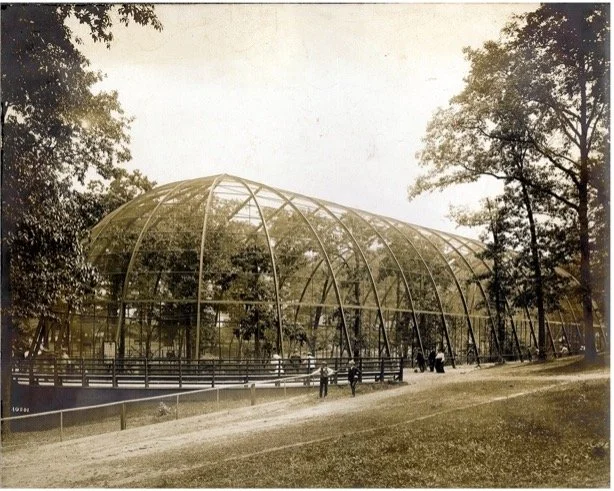
The Smithsonian Institution’s Flight Cage at the 1904 World’s Fair—an exhibit that inspired the founding of the Saint Louis Zoo.
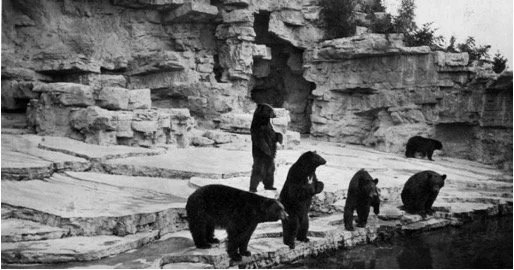
An early view of the Bear Pits, one of the Zoo’s first major animal exhibits in the 1920s.
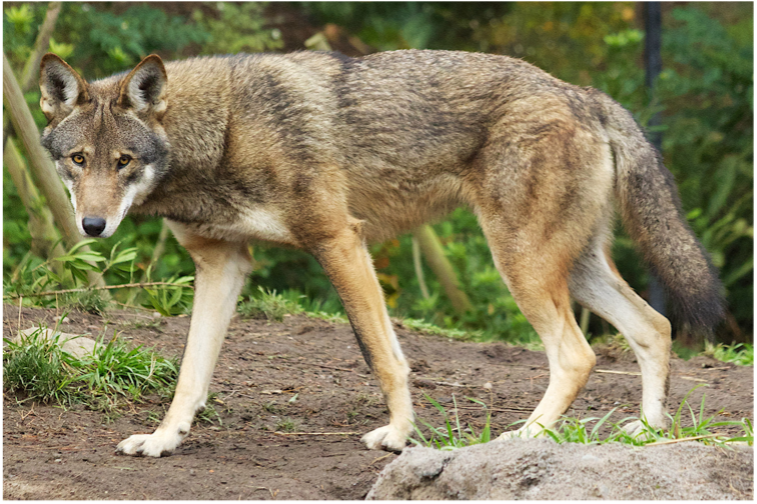
The American red wolf, one of the most critically endangered species in the world and a focus of the Zoo’s ongoing conservation efforts.
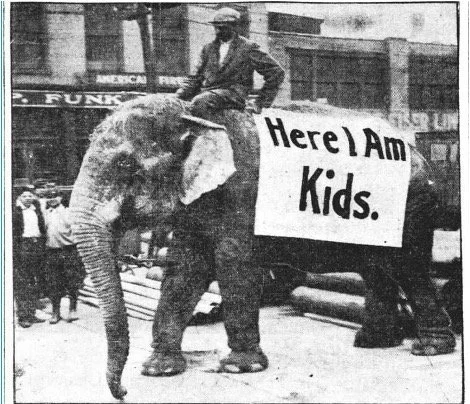
Miss Jim, the Zoo’s first elephant, marking a pivotal moment in the expansion of its animal collection.